

Is AI the most transformative technology in marketing history?
Maybe...but let's take the longer view.

My fellow history nerd Todd Caponi recently published a short article summarizing his take on the most transformative sales technology advancements in the past 150 years. (For those of you who don’t know him, he’s a sales history nerd in the same way I’m a marketing history nerd.)
Todd’s basic point was that although AI is important to the sales profession, and it has the potential to change their work in untold ways, will AI be as transformative as…say…the telephone?
He’s not so sure.
For reference, here’s his list of the biggest technologies that have changed the sales profession:
telephone
automobile
typewriter
photography/videography
air travel
radio/television
personal computer
email
internet
CRM
video conferencing
and yes, AI
It’s a good list. I would argue many of those are marketing innovations as well.
To that end, Todd’s work encouraged me to curate my own list of marketing technology innovations over the same time period—roughly 1880 to 2025. There will be plenty of overlap with Todd’s list, so I’m going to treat those like the gimme-letters on Wheel of Fortune.
I’m also going to organize my list a bit differently. When most people think of marketing, they think advertising, promotion, and communications. But “Big M” marketing is more comprehensive than that. We’ll use the structure many of us learned in college:
Product: The set of features unique to a product or service.
Price: The exchange of value required to match buyer and seller.
Place: The channels or locations where those transactions take place.
Promotion: The communication strategies and tactics employed.
Without further ado, here’s my list of the top marketing technology innovations of the past 150 years:
PRODUCT
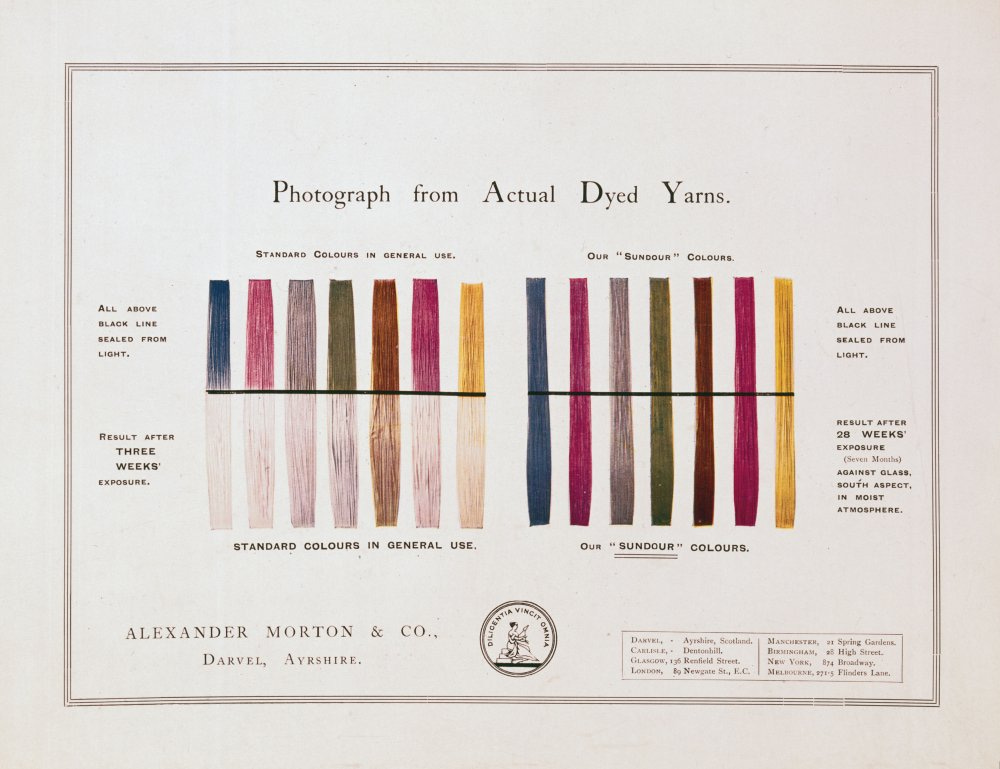
Synthetic Dyes
Mostly invented by German companies and chemists in the late 19th century, synthetic dyes for food colorings and paints made much of the customization we see today possible. Before then, the average person could have any color shirt she wanted…so long as it was white or black. Dyes changed all that.
As an interesting side note, dye technology led to the first antibiotics (sulfa drugs) in the 1930s. Really!
. . .
Plastics
Name a commercial, aerospace, automotive, or medical product today with no plastics. I’ll wait. As much as we might like a world without “forever materials,” we’re not even close to that goal. Modern products are utterly dependent on plastics.
. . .
Product Platform
Everyone’s heard the story of Henry Ford and the Model T. In fact, during a recent conference I attended, several speakers talked about how we are still living in Henry Ford’s “mass production” culture.
I respectfully disagree.
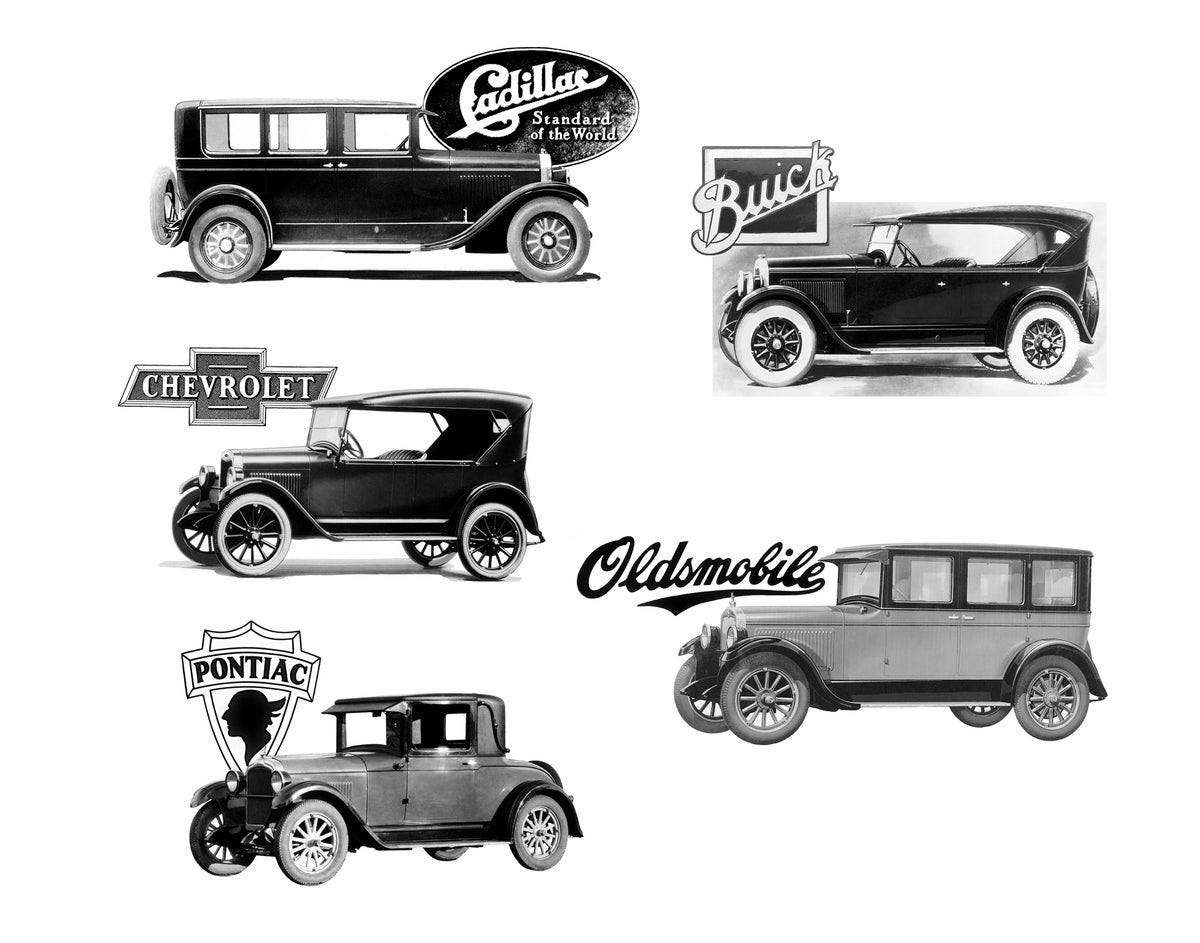
Yes, the Model T was the top selling car in 1926, but by 1930, Alfred Sloan’s GM had overtaken Ford and would never look back. How? GM concentrated not only on individual customer preferences, but also the full lifecycle experience. If you bought a Pontiac as your first car, you could step up to a Chevy as your next, and maybe a Cadillac when you retired. Sloan pioneered the concept of customer lifetime value. This “product ladder” was made possible by the underlying product platform—most of the models shared components, lowering the cost to mass customize unique options.
. . .

3D Printing
Much lampooned by “futurists” for not having an impact, there’s a good chance that if you’ve flown in a plane in the past 10 years, many of the replacement parts have been manufactured using additive manufacturing—aka 3D printing.
The advantages are clear for the aerospace industry: They fly all over the world, and if something breaks, you can’t have every possible spare part everywhere they’re needed. Additionally, unlike most consumer products, aircraft stay in service for decades. We’re already starting to see 3D printing address on-demand, customized product opportunities.
Speaking of on-demand…
. . .

Fast Fashion
Much criticized (often rightfully so, for its sustainability issues), fast-fashion has redefined consumer expectations of how customized a product might be and how fast they’ll get it.
Don’t believe what people say about their commitment to sustainability. Look at what they buy. Consumers are voting with their feet. The answer isn’t telling people to “just say no” (that doesn’t work; see the 1980s), the answer will likely come from increased use of additive manufacturing technology.
. . .
PRICE
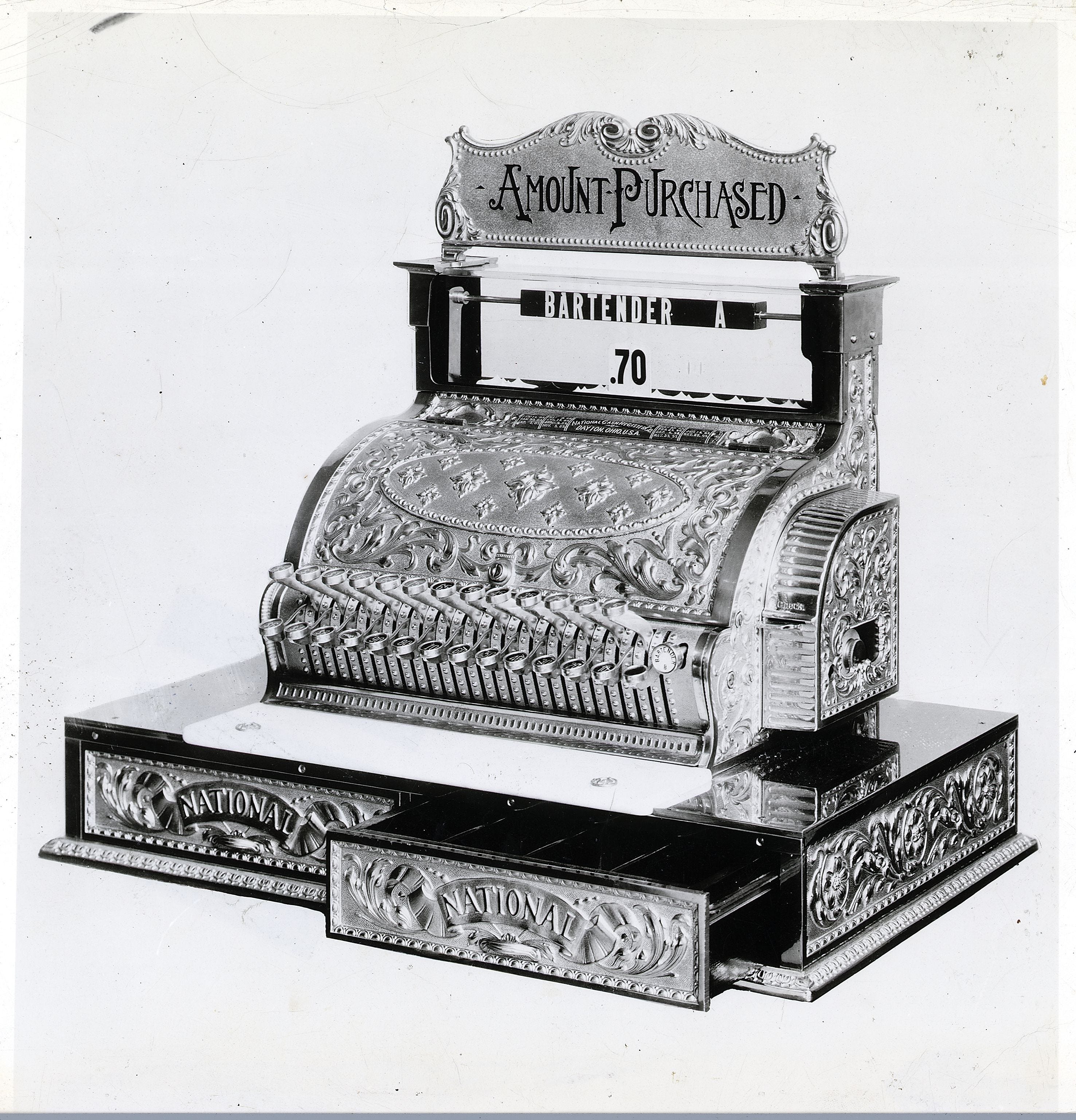
Cash Register
Imagine retailing without one. (Modern tap-to-pay is simply the latest version of the same idea.) As you might not guess, the first cash register was invented by Ohio saloon keepers after the Civil War to protect his money not from drunk patrons, but from embezzling employees.
Necessity is indeed the mother of invention.
. . .
Subscription Pricing
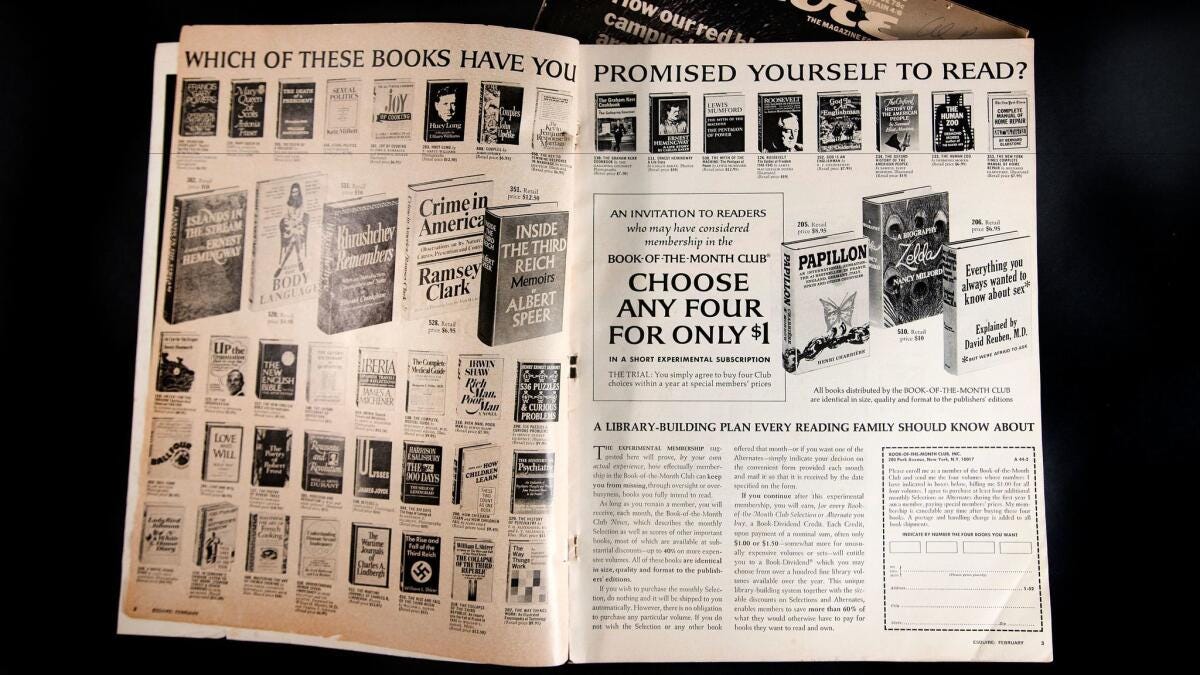
In the 1920s, a former advertising executive created the Book of the Month Club, transforming a product (the book) into an ongoing service. The idea that you could pay for a product like you would a magazine or newspaper subscription dates back to this era.
The big idea is that products (like books) are one-time purchases. That means you need to sell them individually, and you can’t really predict when consumers will buy a new one. A subscription model gives the manufacturer predictability in their revenue stream and supply chain, allowing them to deliver at a lower cost.
. . .
Credit Cards
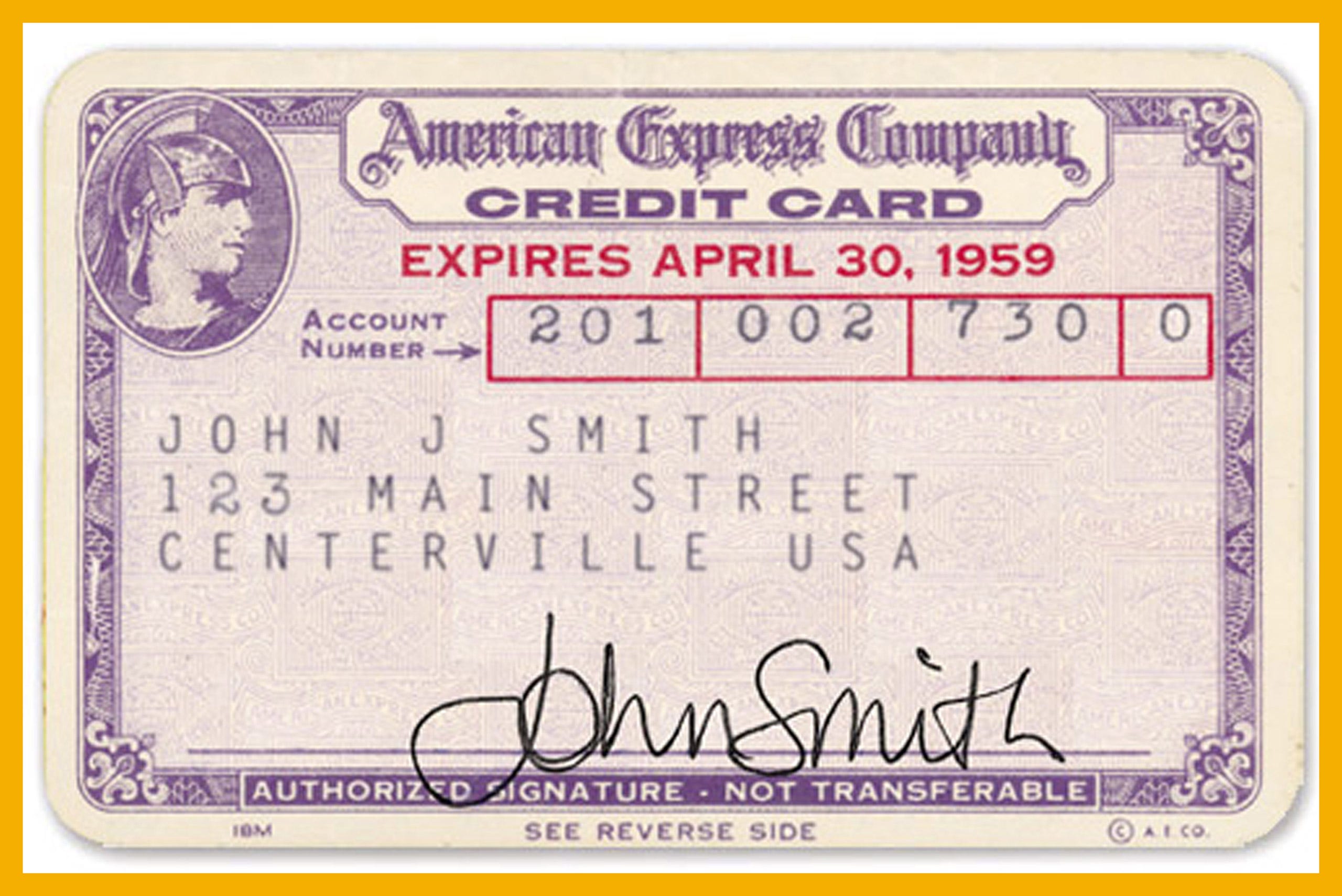
The first credit cards in the 1950s and 1960s took installment payment plans to the next logical step. In the late 1800s (and especially the 1920s), you could purchase big ticket items, like automobiles, on payment plans. But that’s it. For groceries and smaller ticket goods, you needed cash.
Credit cards allowed consumers to put all their purchases on, essentially, a custom payment plan. Buy Now Pay Later (BNPL) is simply the newest incarnation of an old idea.
. . .
Dynamic Pricing
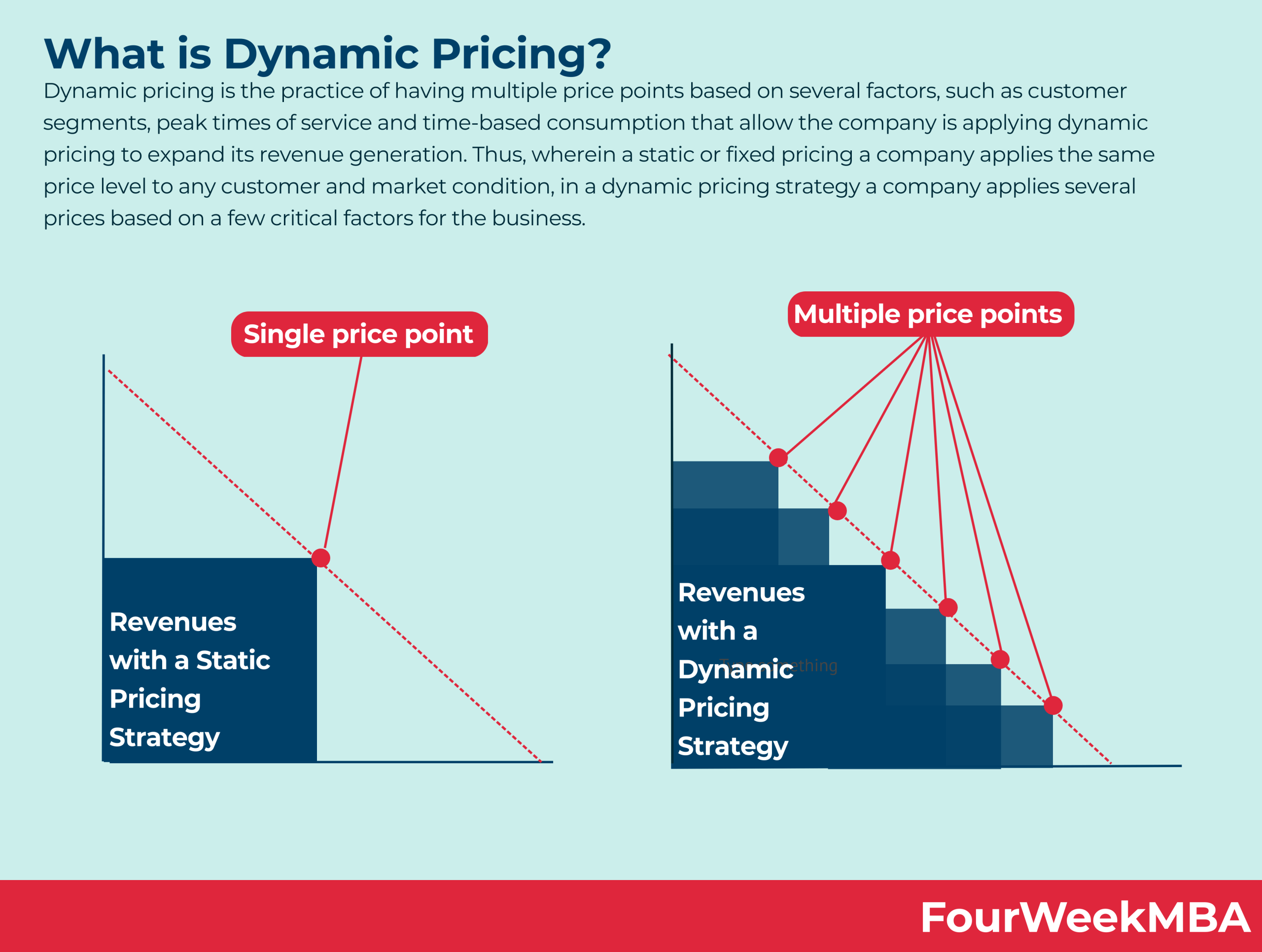
Dynamic pricing may irritate consumers, but it also allows for real-time adjustment to market conditions. Without it, prices would be higher for many items.
It’s important to remember that price is simply a meeting place between buyer and seller—the more efficient that match is, the better for everyone. That said, we don’t like it because of a psychological inclination towards “fairness” in transactions. We don’t like it that someone else got a better deal than we did, even if their circumstances we different.
If you question that, watch one of the funniest videos of all time. It has monkeys.
. . .
PLACE
Big Box Store
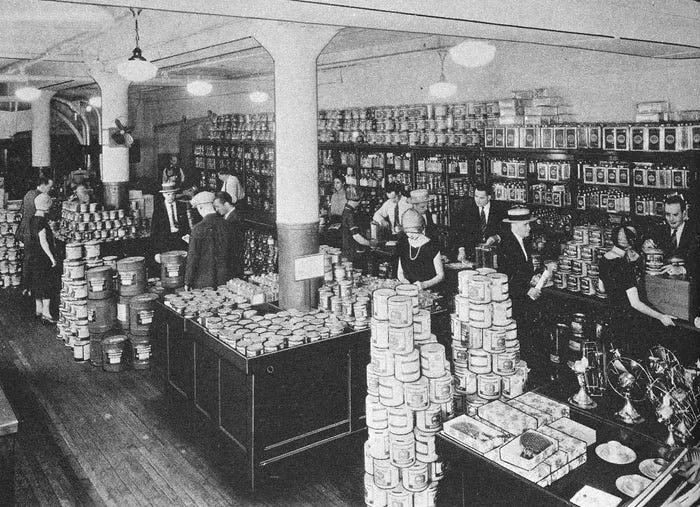
Like a catalog you could walk into, the first Sears store in 1925 set the model for all that followed. Many people bemoan the impact of big box stores on smaller retailers, but the reality is that people voted with their wallets. They appreciated the expansive selection and low prices. Since then, smaller retailers adapted by serving specialized and niche markets.
. . .

Containerized Shipping
Pioneered by Malcolm McLean in the late 1950s, the idea embodies KISS (Keep It Simple Stupid). All cargo would be loaded into identically-sized containers that could pass from ship to train to truck without unloading its contents. Containerization dramatically lowered costs for overseas logistics, allowing for lower-priced consumer goods manufactured in Asian markets.
. . .
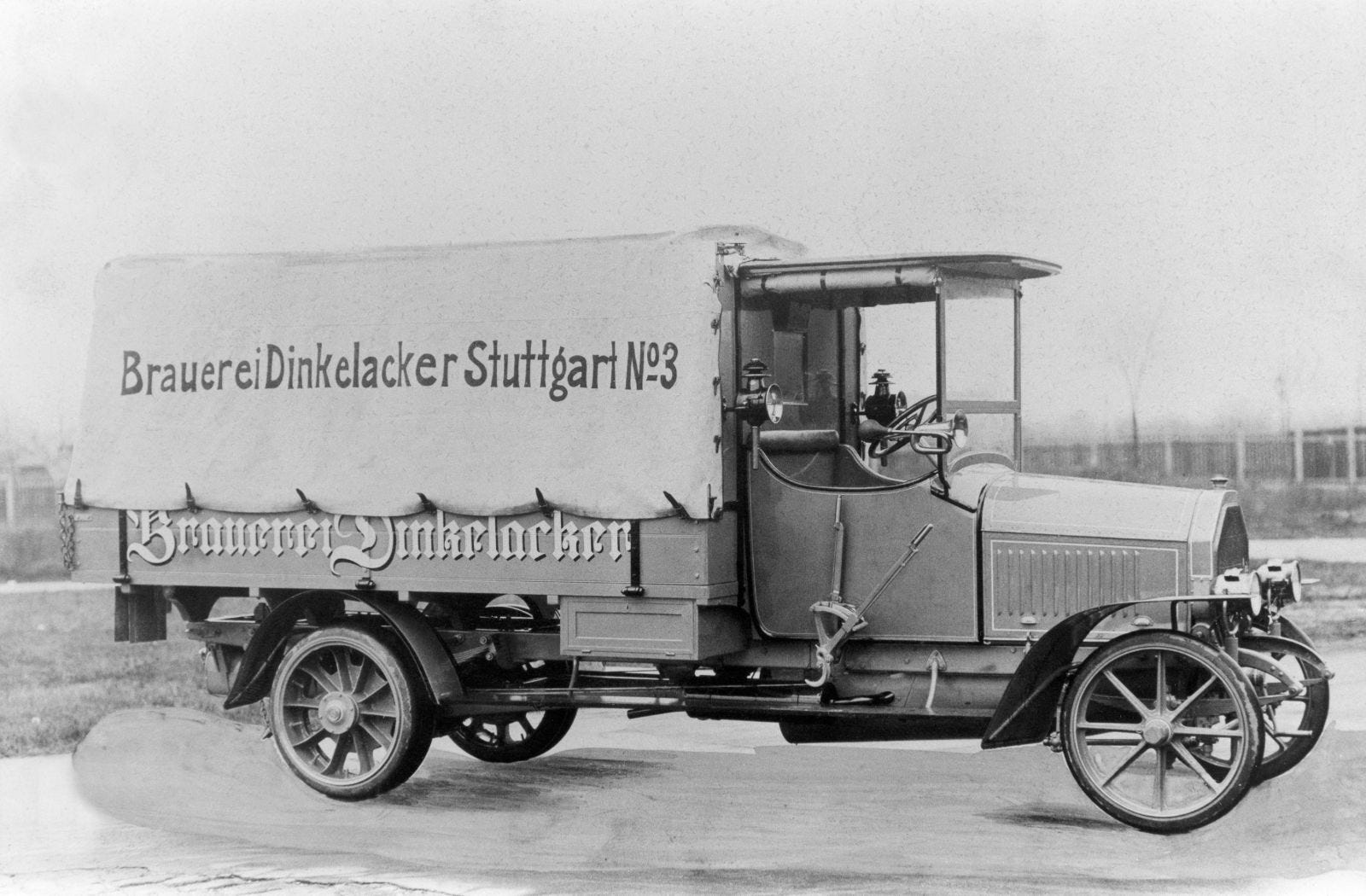
Box Truck
Most people think Ford’s Model T was the most important automobile ever created. I respectfully disagree. Without box trucks, the abundance of modern life simply could not exist…at least, not at a price the average person could afford. The next time you go out for a drive, count how many you see.
. . .
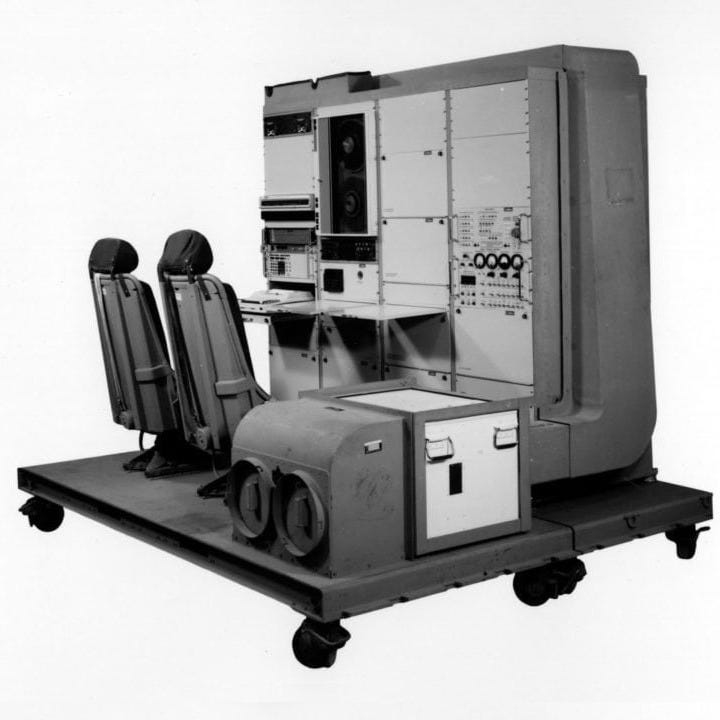
GPS (Global Positioning)
GPS is not just about finding your way. From a business perspective, it’s also about product traceability throughout a supply chain. This time-to-location data enables Just-In-Time manufacturing and retailing.
Does anyone remember the days before GPS? Those spiral-bound “Kings” maps? I can probably still read one…but I’m not sure. It was an art.
. . .
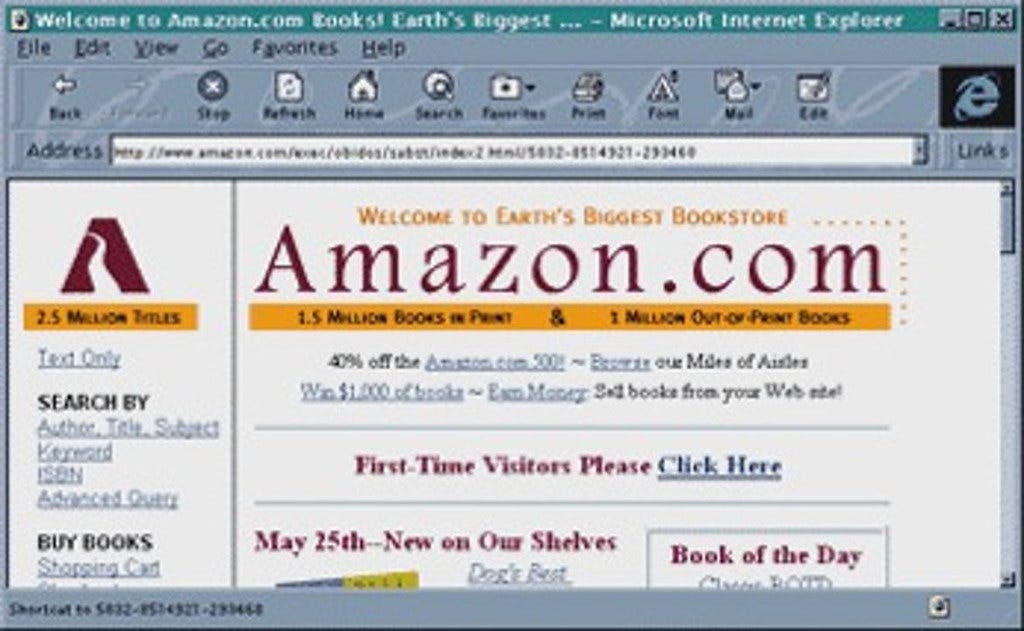
E-Commerce
Todd mentioned “the internet,” because he was focused on 1:1 selling. I would extend that to e-commerce because it was a marketers’ dream: eliminate those pesky salespeople. At a high-level, it’s like a catalog with no theoretical limitations.
Did it work? Are salespeople all gone?
Nope. According to our best estimates, despite its ubiquity, e-commerce accounts for only 15-20% of all retail sales. (Less in B2B/Business To Business.)
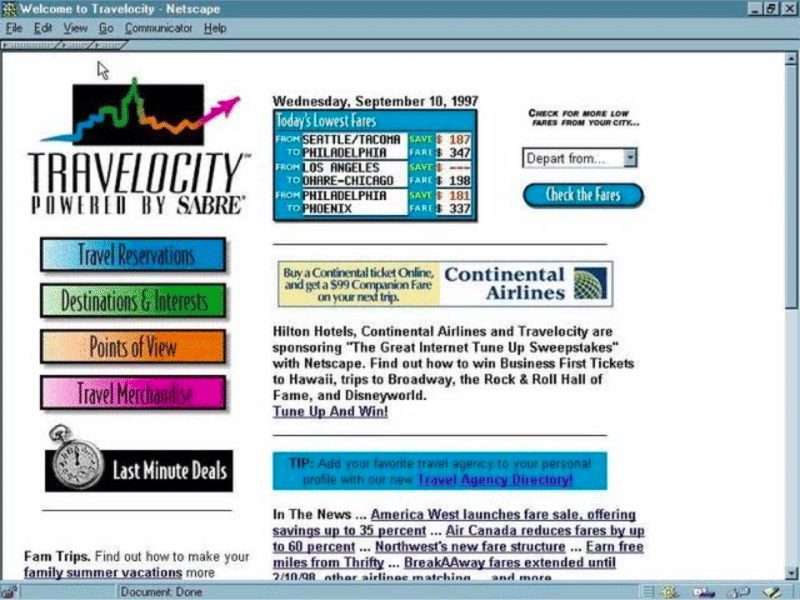
Online Booking
Can you remember the days before you could buy concert tickets, flights, ride-shares, and restaurant reservations online? I can. In the mid-1990s, travel agents weren’t concerned about the first online travel booking websites. They should have been.
PROMOTION
Barcodes
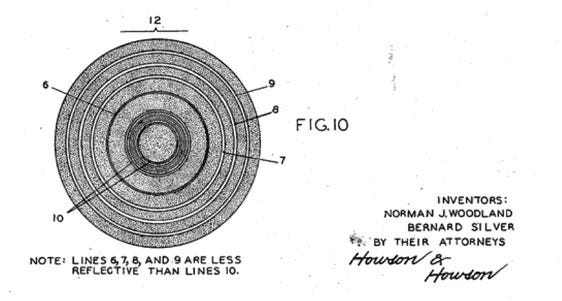
Unique identifiers were the best thing to happen to product marketers and retailers in the past 50 years. They allow targeted promotions and much better real-time sales data. (QR codes are just another version of the same idea.)
Projector
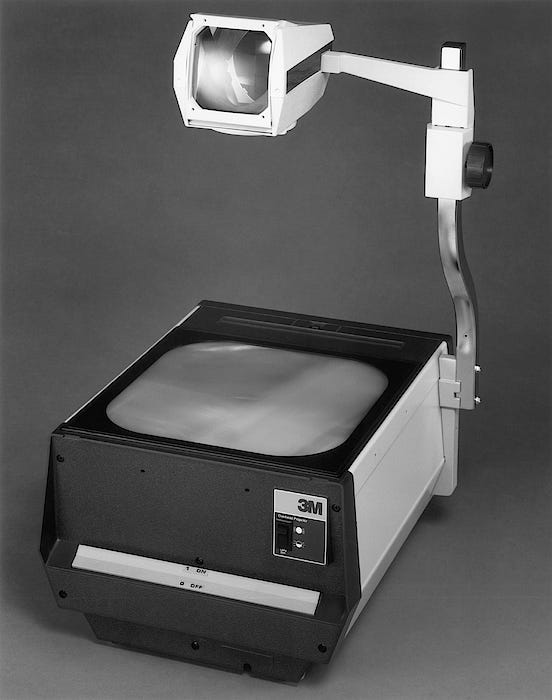
I’m sort of surprised Todd didn’t include this one. Along with its software incarnation, PowerPoint, the projector transformed B2B marketing.
Auction Advertising
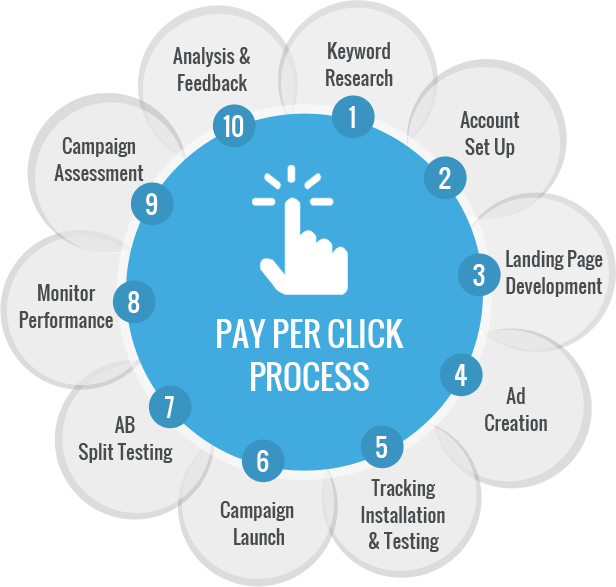
Also known as PPC (Pay Per Click), auctions transformed advertising from alchemy to arithmetic. There’s an old saying in marketing that 50% of all advertising is wasted…we just don’t know which half. It’s a tongue-in-cheek way to describe a major problem with something marketing folk call attribution. In short, we want to know if our advertising “worked”—e.g., drove a sale. PPC advertising allows marketers to see at least part of that process.
More than that, the auction model is an example of dynamic pricing (see above) where advertisers only pay a fraction more than the next highest bidder for the same advertising space.
It’s not that there aren’t lots of issues marketers have under the surface, but it was (and is) revolutionary.
Desktop Publishing
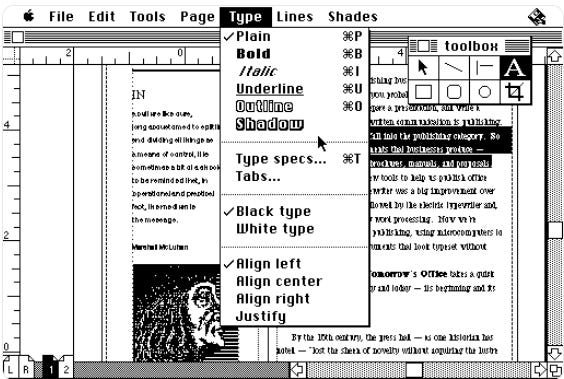
Desktop publishing allowed everyone (including small businesses and entrepreneurs) access to the tools to get their message out there—at first, in print, and then, on the web.

Virtual Tour
Would you buy a house without taking a virtual tour first? The software has becoming pretty sophisticated, but the first versions date back to the 1990s. In this case, real estate agents enthusiastically adopted the technology…which probably saved their careers.
Honorable Mentions:
Zip Codes: The five-digit system we use today wasn’t in place until the 1960s. Direct mail would never be the same, though catalog mailing dates back to the 1870s.
Telegraph: This revolutionized 1:1 communication in business, but it was implemented in the 1850s—before my 150-year time horizon.
What else should be on this list?
Don’t be shy.
Comment!
The comparsion to the telephone really puts things in perspectve. We often get caught up in the AI hype but you're right that containerized shipping and GPS probably changed more about how products reach consumers than AI will.
Thank you for walking us through the most transformative technology in marketing history, Jason! I agree, these are all important innovations that have impacted marketing (and sales).
Off the top of my head, additional transformations came with the introduction:
-Pantone (1963) and RPG (2001) codes (and related technology) to produce branding colors
-RJ Reynold's purchase of Hawaiian Punch brands from Pacific Hawaiian Company in 1963 to market products to children with bright, appetizing colors and use "hyper-palatable" additives to make products highly addictive
-Social media technology in the 1990s (e.g., Classmates.com in 1995 and Six Degrees in 1997)
-While not really technology, but more data classification: SIC codes in 1937; NAICS codes in 1997 to enable businesses to segment and target audiences